
Changing from Evorel Sequi to Evorel Conti

Will Your Withdrawal Bleeds Stop Straight Away?
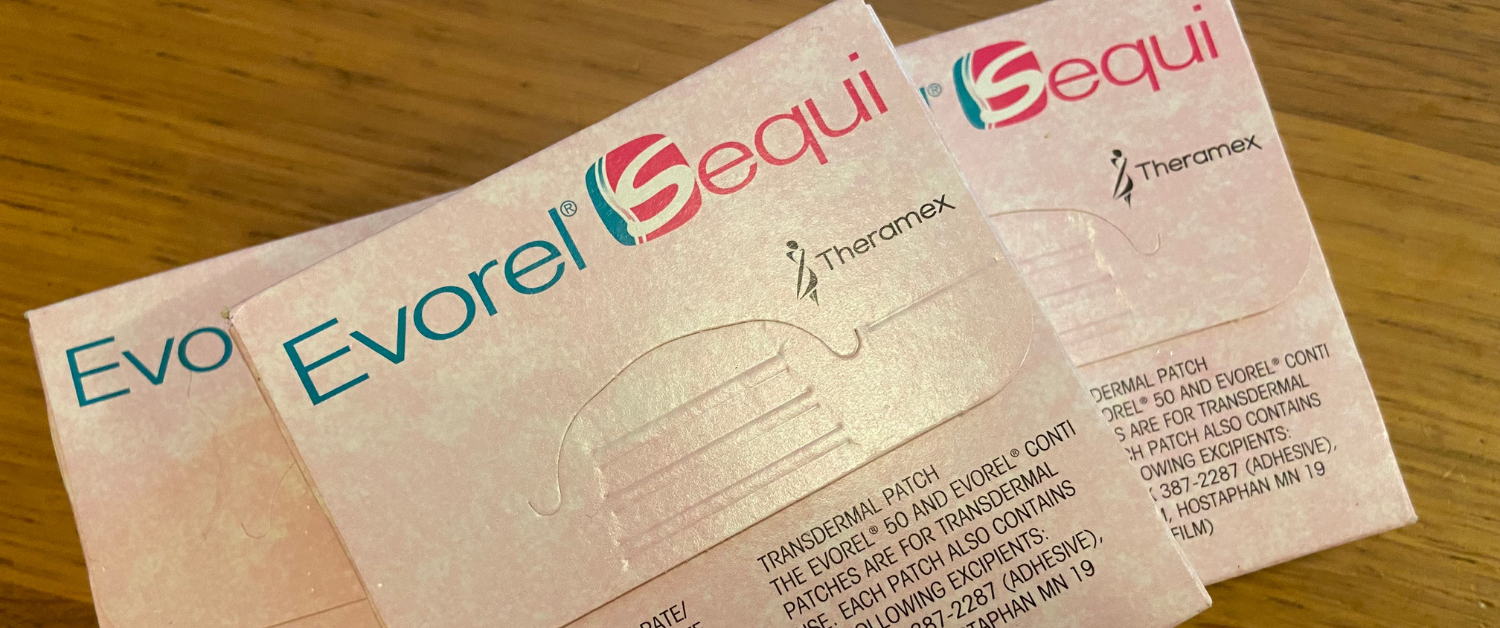
One of the questions I'd never really thought to ask before changing from Evorel Sequi to Evorel Conti was what would happen to my monthly bleed.
I'd assumed that because Evorel Conti is designed to be taken continuously, the withdrawal bleeds would simply stop. When I experienced a light bleed during my first month, followed by another the following month, I found myself wondering whether that was normal. Only then did I realise I'd never actually asked my GP what to expect after making the switch. Instead, once again, my perimenopause journey led me down another research rabbit hole.
Why I changed
I'd been using Evorel Sequi since January 2024. If you've followed my perimenopause journey, you'll know I don't attribute the improvement in my symptoms solely to HRT. I believe lifestyle and diet changes have played an important role too. But HRT has definitely been a key factor in helping me feel much more like myself again.
I started this year with a nagging thought: when will I stop having periods? I'd become so tired of them.
Since starting HRT, my periods had become much more predictable. They'd returned to a regular monthly pattern, and the heavy flooding I'd once begun to despair about had thankfully settled. Knowing I'd be turning 54 in December, I wondered whether it might soon be time to switch to Evorel Conti.
Looking back, it wasn't actually the bleeding that was bothering me most. What I was really questioning was the emotional side of things. I was growing tired of the monthly PMS rollercoaster and hoping for a more settled emotional cycle.
I'd had a niggling feeling that I'd read somewhere women often changed to continuous HRT around my age, but I wasn't sure. So I booked an HRT review with my GP.
Afterwards, I discovered that current UK guidance recommends changing from sequential HRT to continuous combined HRT after five years of use, or by age 54, whichever comes first.
The question I hadn't thought to ask
What I hadn't really thought about was those few weeks shortly after making the switch.
Would the monthly bleed simply stop?
Would there be a final withdrawal bleed?
Would my body need time to adjust?
These weren't questions I'd thought to ask my GP before making the switch, but they quickly became questions I found myself asking after my appointment.
My experience so far
It's now been two months since I changed to Evorel Conti. Both months I've had what I'd describe as a light period lasting a couple of days. It's certainly lighter than the withdrawal bleeds I had on Evorel Sequi, but it was enough to make me wonder whether everything was settling as it should. Part of me felt uncertain about whether I'd made the right decision to change.
After doing some reading, I was reassured to discover that light bleeding after changing to Evorel Conti can be a normal part of the transition. While Evorel Conti is designed to stop monthly withdrawal bleeds, it's common to have light bleeding or spotting during the first few months after starting continuous combined HRT while your body adjusts. In other words, the monthly bleeds don't always disappear overnight.
I found the Women's Health Concern factsheet on unscheduled bleeding while using HRT particularly helpful, as it explains what can be expected during the settling in period and when it's a good idea to seek medical advice.
I also found Dr Louise Newson's article on changes in bleeding while using HRT reassuring, as it answered many of the same questions I'd been asking myself.
Sometimes reassurance is all we're looking for
One of the biggest lessons perimenopause has taught me is how often we find ourselves searching for reassurance. Is this normal? Has anyone else experienced this? Should I be worried?
Sometimes we don't need an immediate solution. We simply need to know we're not the only one experiencing it. Finding reliable information reminded me that light bleeding during the first few months after changing to continuous HRT can be expected for some women. Simply knowing that made me feel much less anxious about what I was experiencing.
Of course, if bleeding continues beyond the first few months, becomes heavy or changes unexpectedly, it's important to speak to your GP or menopause specialist. If that happens, I'll be doing the same.

This probably won't be the last question
I'm only a couple of months into this new chapter of my HRT journey, so I don't yet know exactly how my experience will unfold. What I do know is that I've already had plenty of questions along the way, some I'd expected to ask and others that hadn't even crossed my mind until they happened.
When I know more, I'll come back and share it here on the blog. Because if I've been asking these questions, there's a good chance someone else is asking them too. If reading about my experience answers just one question you were asking yourself, then I'm glad I shared it.
Writing this blog reminded me just how many questions I had after changing from Evorel Sequi to Evorel Conti. Even after finding the information I needed, I still had a few questions of my own.
If you're in a similar situation, these are some of the questions you might still have.
Is it normal to bleed after changing from Evorel Sequi to Evorel Conti?
Yes. Some women experience light bleeding or spotting during the first few months after changing to continuous HRT while the womb lining adjusts. However, if bleeding continues beyond the first few months, becomes heavy or changes unexpectedly, it's important to speak to your GP or menopause specialist.
How long can bleeding continue after changing to continuous HRT?
Every woman is different, but it can take several months for your body to adjust after changing from sequential HRT to continuous combined HRT. That's why many healthcare professionals recommend giving it a little time while keeping a note of any bleeding or other symptoms.
When should I speak to my GP?
Although it can take three to six months for many women to settle on continuous HRT, if your bleeding continues beyond this, becomes heavier, starts again after stopping, or anything else concerns you, it's always worth seeking advice from your GP or menopause specialist.
Every woman's experience of HRT is different. This blog simply shares my own experience, alongside the information I found helpful while trying to answer my own questions. If anything you're experiencing concerns you or doesn't feel right for you, please speak to your GP or menopause specialist.
This is one part of my HRT and perimenopause journey. If you're earlier in your own journey, you might also find these helpful:
How HRT, Lifestyle Changes, and Testosterone Helped Me Feel Like Myself Again in Perimenopause
Finding My Way Back to Myself Through Perimenopause
Enjoyed reading this?
If you'd like more reflections like this, I'd love to welcome you to The Pause, my monthly newsletter for women navigating midlife..
Once a month, I share thoughtful notes on midlife, walking, wellbeing, seasonal living and everyday life, alongside recent blog posts and a preview of what's coming next.
Browse all perimenopause blog posts →
About Sarah
Sarah is the founder of Mindful & Me, a reflective wellbeing space for women in midlife. Through blogs, newsletters and community walks, she shares practical reflections on perimenopause, seasonal living, walking and slowing down in a busy world.