
The Weekend I Stopped Measuring Creative Output
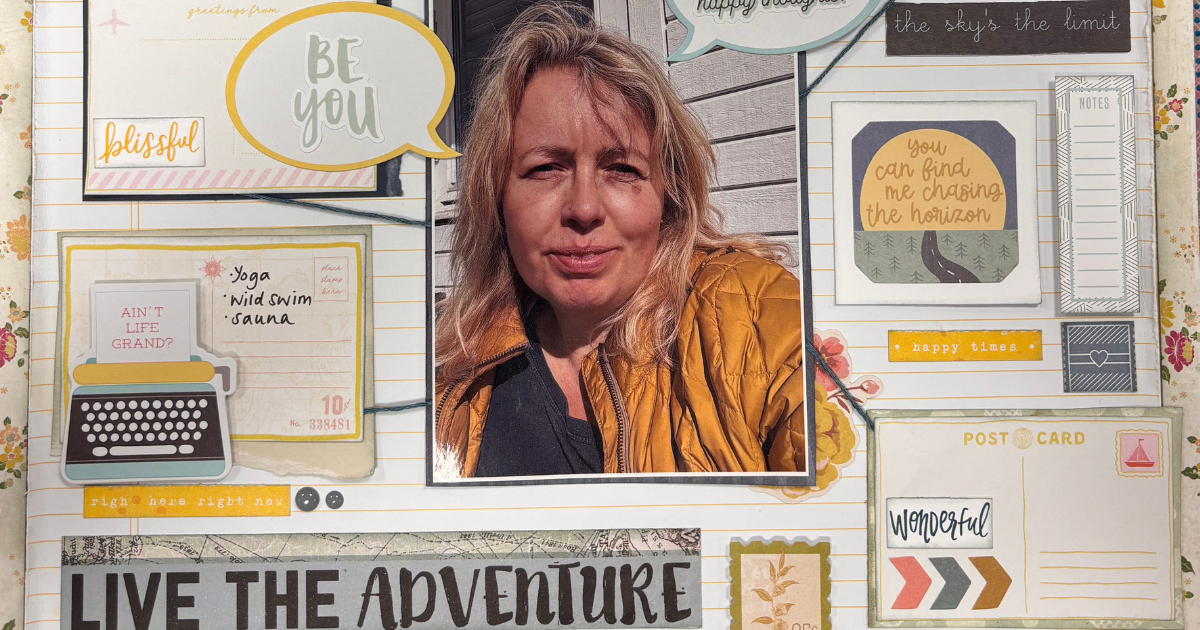
The one scrapbook page I completed during the Paper Fox retreat weekend.
At a recent weekend away at a Paper Fox scrapbooking retreat, something I first noticed in December came back into focus again.
At the end of these weekends, a familiar question often comes up.
“How many pages did you get done?”
For some women the answer is six. For others it’s ten, sometimes more. This weekend I even heard someone say they’d completed over thirty pages.
It’s often how women measure how successful they’ve been at the retreat.
There’s nothing wrong with that. We all create page layouts and albums in different ways. Many women arrive with a clear plan and enjoy leaving with a stack of finished layouts.
I’ve never really done that.
Over the last couple of retreats I’ve realised that I don’t arrive with a number of pages in mind anymore. I used to try to finish as many layouts as possible, often working against the clock rather than really enjoying the process of creating something.
Looking back, I think that mindset slowly started to take some of the enjoyment out of the craft. Instead of focusing on the creativity, the conversation, and the time spent with a lovely group of women who share the same love of scrapbooking, I was measuring the weekend by how much I produced.
I’ve always preferred a slower, more creative approach to scrapbooking anyway. I like starting each page from scratch, experimenting with papers and colours, and seeing where the layout takes me rather than following a kit or a ready-made design. It’s part of a quieter shift I’ve been noticing more in recent months about how I spend my time and what actually feels meaningful.
It made me start wondering why creativity can so often feel tied to output.
When Creative Hobbies Stop Flowing So Easily
Scrapbooking is a craft I’ve loved for years, so when I noticed I wasn’t producing very much during retreat weekends, I started questioning why. Had I lost my enthusiasm for it? Was I falling out of love with something that used to bring me so much enjoyment?
Part of it, I realised, was simply familiarity. Scrapbooking flows more easily when you’re doing it regularly. You know your stash. You know which papers go with which photos. The creative decisions feel quicker.
When you haven’t done it for a while, it’s different. You open bags of supplies you haven’t looked at in months. You forget what you packed. You spend time rediscovering your papers, tools and photos before creativity even begins.
And sometimes, when the opportunity finally arrives, the creative mood just isn’t there.
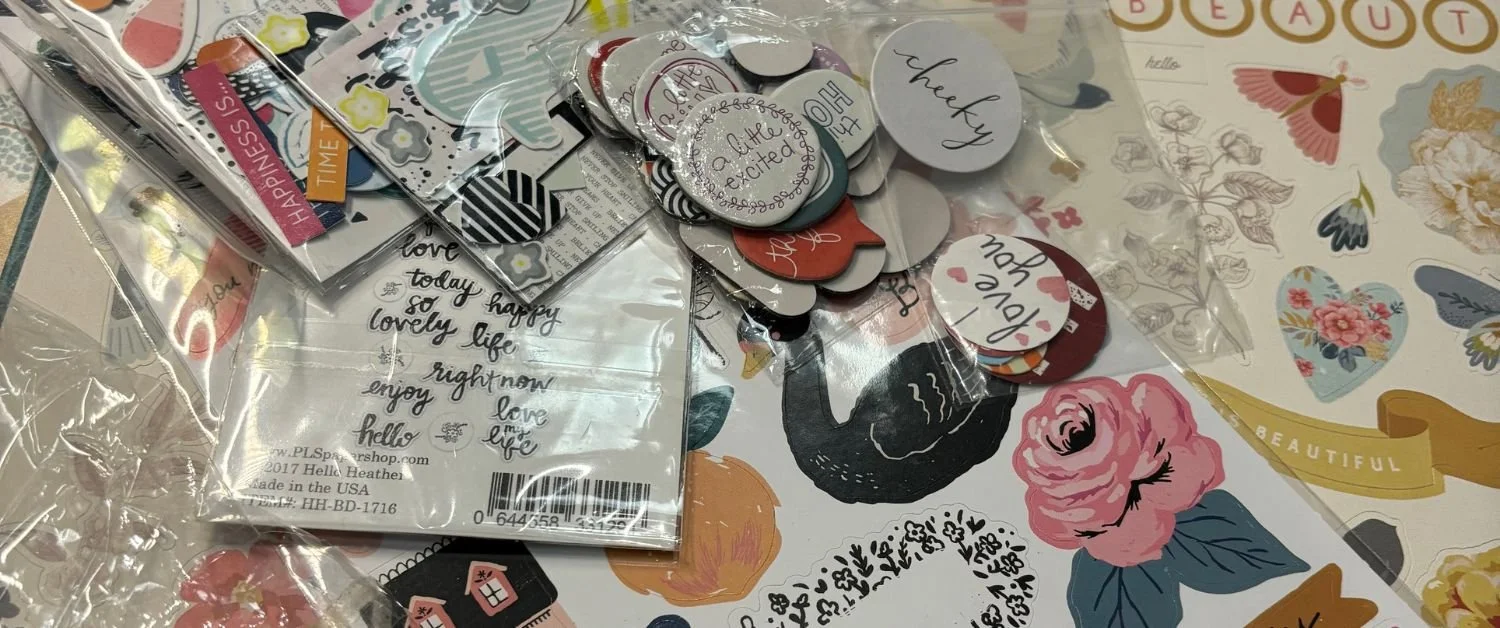
Some of the papers, embellishments and supplies I brought along to the retreat.
The December Retreat That Changed My Perspective
I noticed this most clearly at a retreat last December.
Over the whole weekend I completed one page.
Just one.
At first it felt slightly disappointing. A whole weekend away and only one page to show for it.
But as the weekend unfolded, something shifted.
Although I hadn’t produced very much, the time had still felt valuable. I’d spent hours being creative in quieter ways, sorting through papers, looking through photos, and reacquainting myself with everything I’d brought with me.
I’d also rested. I’d read. I’d gone for a walk.
And I’d spent time with other women who love the same craft.
That last part, I realised, might actually be the most important part of these weekends for me.
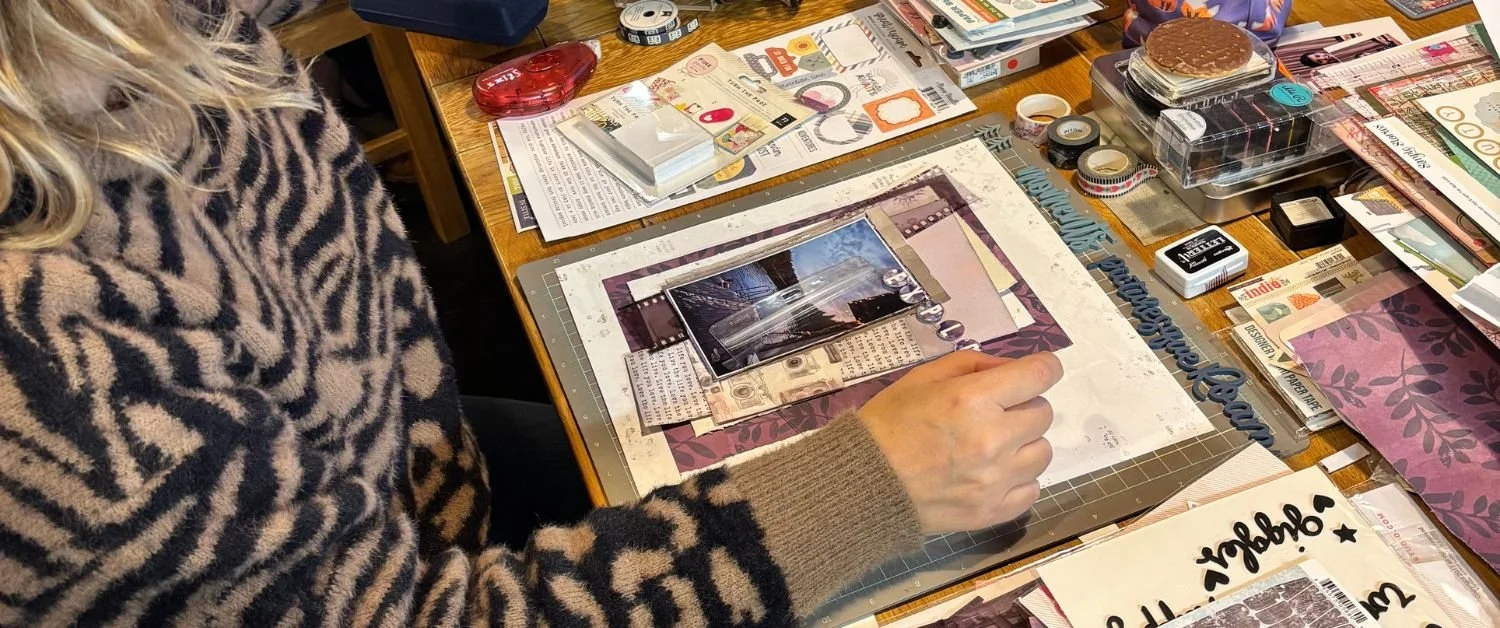
One of the pages taking shape during the retreat weekend.
The Value of Creative Time With Other Women
Around the tables were piles of patterned paper, photos waiting to be placed, ink pads and scissors, and women quietly working on their layouts.
There’s something special about a room of women crafting together. Conversations drift across the tables. Stories get shared. Sometimes the topics are light and funny, sometimes more thoughtful. There’s a natural ease to it.
This Paper Fox weekend reminded me of that again.
Our group was much smaller than some of the retreats I’ve attended before. There were about ten of us in a smaller side room rather than the eighty or ninety across the main hall.
The difference was noticeable.
In larger groups it can sometimes feel quite overwhelming and surprisingly isolating. You might only be able to hear the person beside you or opposite you. Some people are deep in concentration or wearing headphones, and conversation becomes fragmented across the room.
In a smaller space, the atmosphere changes. People chat more easily. Inspiration moves around the table. You hear about someone’s photos, someone else’s family story, someone’s latest creative experiment.
And once again, I only completed one page.
But this time it didn’t carry the same question of whether something was wrong.
Instead, it felt like confirmation of something I’d begun to realise back in December.
Creativity Doesn’t Always Need to Be Productive
Creativity doesn’t always need to be measured by output. It reminded me of a similar realisation I wrote about after reading Wintering, where stepping away from constant productivity can sometimes be exactly what we need.
Sometimes a creative weekend is about reconnecting with the materials you love. Sometimes it’s about being around people who understand the craft in the same way you do. Sometimes it’s simply about making space to sit with your ideas until inspiration returns.
And sometimes, when someone asks how many pages you finished, the answer is just one page.
And that can be enough.
Sarah is the founder of Mindful & Me, a reflective wellbeing space for women in midlife, sharing gentle, practical support around perimenopause, seasonal living, and slowing down, often inspired by real life.
If you enjoyed reading this
If you’d like to stay connected, I send one short newsletter at the end of each month. It’s a space for thoughtful reflections on wellbeing, seasonal living and slowing down, alongside links to recent blog posts and a sense of what’s coming next.